
How we create
How a LUCEA experience unfolds
Each encounter has its own intention and rhythm. We begin by creating conditions of presence and care. From there, the body, movement, language, nature and relationship become ways of observing what is asking to be seen.
Lucero and Alejandra accompany what emerges without imposing an interpretation or forcing a conclusion. The process follows six interconnected stages, while remaining responsive to the needs of each person and group.

Methodology
Four pillars, one intention
Presence and awareness
Practices that invite you to pause, observe, and connect with the present experience.
Draws on the transpersonal approach and meditation.
Body and regulation
Resources for recognizing how tension, emotion, and experience also express themselves in the body.
Observing the body's memories. Draws on bioenergetics, Hatha yoga, and biofeedback.
Bonds and systems
Dynamics for observing how we relate, set boundaries, and take our place within the systems we belong to.
Draws on Gestalt-informed exercises, constellations, and horse-assisted facilitation.
Reflection and integration
Complementary tools that can help organize what was lived and open new questions.
Draws on the Enneagram, graphology, and symbolic exercises when relevant.
The journey
From feeling to integration
Through the methodology, we guide you across all six stages toward integration, each with its own rhythm and its own place within the process.
Feel
Attention moves from explanation to direct experience. Participants are invited to notice bodily sensations, emotion, tension, movement and internal responses without immediately judging or interpreting them.
Connect
From greater bodily awareness, we begin to explore relationship: with oneself, with other people, with nature and, in some experiences, with horses. Connection becomes a way of observing presence, boundaries, trust and communication.
Pause
We begin by stepping outside the pace of daily life. Breath, silence and gentle bodily practices help establish presence, safety and attention before moving into a deeper experiential space.
Recognize
Patterns that are difficult to see intellectually can become more visible through lived experience. Participants may recognize roles, loyalties, reactions, boundaries or ways of relating that have been operating outside their immediate awareness.
Making the unseen visible
Naming with care what remains unseen.
Constellations are an experiential practice for observing the relationships and systems we belong to — family, partnership, work and other significant bonds. Through guided representations, they can make visible dynamics, loyalties, roles and patterns that quietly shape how we relate, decide and respond.
The experience does not aim at definitive explanations. It opens a space to view a situation from another angle and consider different ways of standing in relation to it.
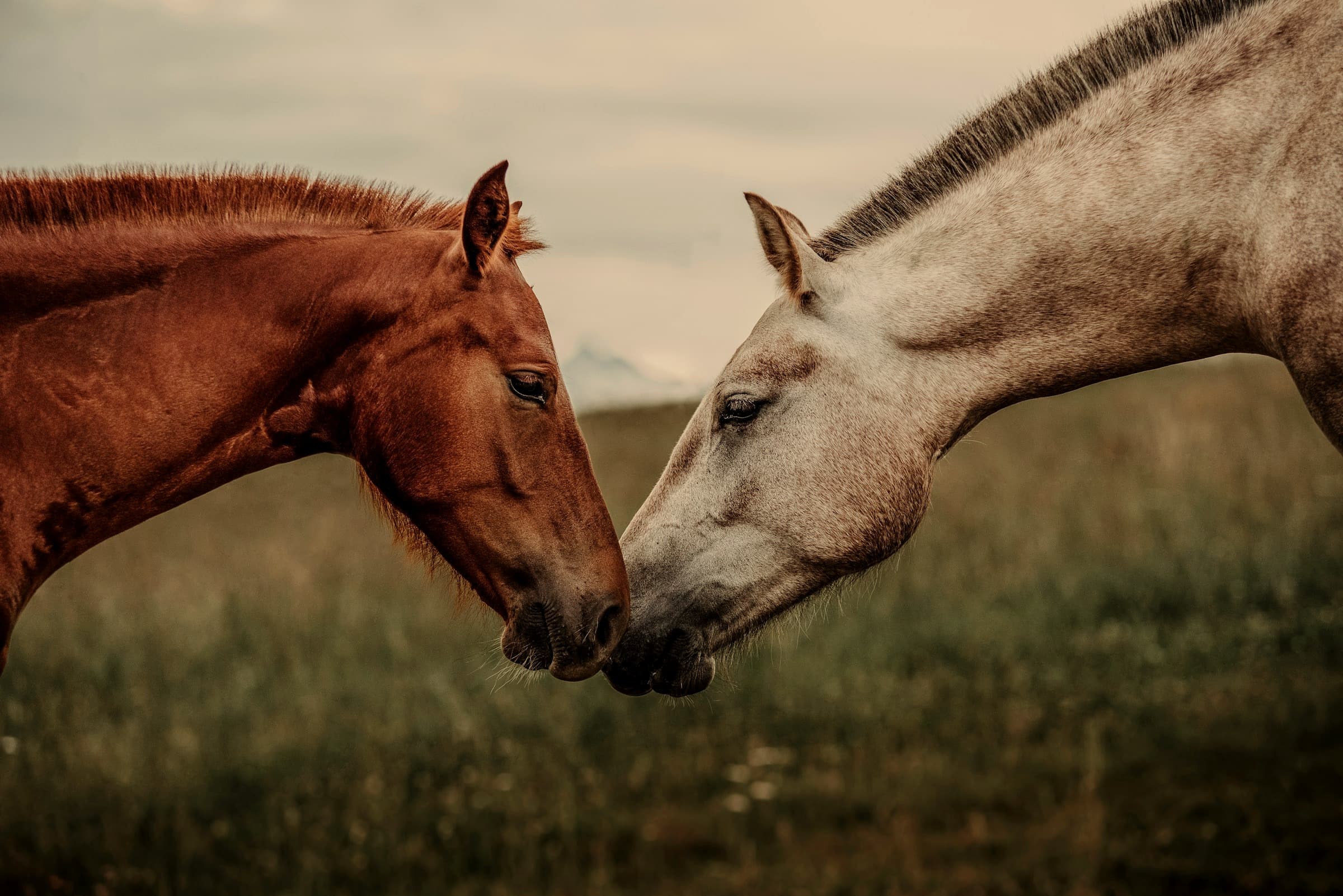
Bringing horses into the process turns representation into a real-time bodily and relational experience. Participants work from the ground — never riding, and with no prior experience required — accompanied throughout by a specialized facilitator.
Horses respond to movement, bodily tension, breathing, intention and relational behavior, offering immediate feedback on the interaction. A horse's response is never a diagnosis, a verdict or an absolute truth — it is one more thing to observe, and the facilitator helps each participant build their own understanding of it.
Release
Recognizing a pattern can create room for a different response. Through movement, expression, relational exercises or symbolic actions, participants may loosen habitual ways of holding tension or responding to a situation.
Integrate
The experience closes by giving space to reflection, language and meaning. The intention is not to leave with a definitive interpretation, but to recognize what feels relevant and return to daily life with greater clarity and awareness.

What supports the process
The six-stage journey is held by an integrative framework grounded primarily in:
- Psychology and Transpersonal Therapy
- Bodily and Gestalt-informed awareness
- Experiential and relational learning
- Nature and horse-assisted facilitation when appropriate
- Reflection and integration
Complementary resources — such as the Enneagram, graphology, biofeedback or symbolic exercises — may be woven in when they serve a specific experience, offered as optional tools rather than equivalent scientific or diagnostic systems.
These resources are selected intentionally according to the purpose of each experience. They are tools for observation and reflection, not diagnoses, and they do not replace psychological, psychiatric or medical care.

The experience continues beyond the encounter
Integration does not mean having every answer. It means returning to daily life with a clearer relationship to what was felt, recognized and understood.
Explore upcoming experiences